

Haydée Agras on Data, Football and Breaking Barriers in Sports Analytics
Haydée Agras on Data, Football and Breaking Barriers in Sports Analytics
For many people, football is about instinct, passion and moments of brilliance on the pitch. But behind every match is an increasingly sophisticated layer of technology and data shaping performance, strategy and decision-making.
For Haydée Agras, a football analyst at Brentford Football Club, analysing the game through data is exactly where her passion lies.
After changing her career as a player due to a knee injury, Haydée was determined to stay involved in the sport she loved. Rather than moving into coaching, she found herself drawn to the analytical side of football, a field that was only just beginning to emerge.
“At the time I started, analysis was still very new,” she explains.
“Now most clubs have three or four analysts, but when I started there was basically nobody.”
Today, sports analytics is one of the fastest-growing areas in the intersection between sport and technology, transforming how teams prepare, train and compete.
Turning data into football strategy
In modern football, every match generates a vast amount of information. From player movement and GPS tracking to tactical positioning and performance metrics, the game produces millions of data points.
Haydée’s role is to translate that complexity into actionable insight for the coaching staff.
“A football game generates around 2 to 2.5 million data points, from tracking cameras, GPS devices and performance systems,” she explains.“We filter all that information and turn it into something useful. Coaches don’t need everything; they need the key insights.”
In practice, this means analysing multiple matches of upcoming opponents, identifying patterns in tactics and player behaviour, and creating reports supported by video clips and data analysis.
“We watch around six games of the opposition to identify trends. Then we present the key findings, usually three main insights, along with the relevant video clips. Our job is to filter the data so coaches can make decisions quickly.”
But football analytics doesn’t operate in isolation. Instead, it sits within a wider ecosystem of departments using data to optimise performance.
“Different departments use the data differently,” Haydée says*.*
- “Performance teams, medical teams, physios, everyone works together. It’s a group effort.”*
Where data meets human judgment
Despite the scale of data available in modern football, the human element remains essential.
Experience, instinct and observation still play a critical role alongside analytics.
“Sometimes the data flags something and we check it with video or with the player,” Haydée explains.
“Other times we notice something on the pitch first and then go to the data to confirm it.”
Years of watching and analysing the game allow analysts to recognise patterns that numbers alone cannot fully capture.
“I’ve watched thousands of matches. Sometimes you can sense that something isn’t quite right tactically, and then you use the data to check it.”
In this way, modern football analysis sits at the intersection of technology and human expertise combining advanced analytics with deep knowledge of the game.
Using data to build confidence
One of the lesser-known aspects of sports analytics is the psychological dimension.
Data isn’t just used to identify problems, it can also support confidence and performance.
“Players are human,” Haydée says.* “Sometimes they need confidence.”*
She recalls discovering that a goalkeeper at the club had one of the highest penalties save rates in Europe, something the player himself didn’t realise.
“I told him about the statistic and his confidence for the next penalty was really high. Sometimes data can help create that mindset.”
However, she also recognises that not every statistic needs to be shared.
“If the numbers are not helpful for a player at a particular moment, we might use the data internally but not present it directly to them. The goal is always performance.”
Being a woman in a male-dominated industry
Football has historically been a male-dominated space. Sports analytics and performance technology are also fields where women remain underrepresented.
For Haydée, that reality has been part of her career journey.
“When I started, I didn’t have many references, not in analysis and not women either,” she says.
Whilst she acknowledges that barriers still exist, she believes progress is being made.
“It’s improving. Not just in football, but across many industries. When I started it was more difficult.”
At Brentford, she says she has found a supportive environment.
“I’ve never felt like I couldn’t speak or share my opinion here. That’s really important.”
Unintentionally becoming a role model
Although Haydée never set out to become a visible figure for women in sports technology, she has increasingly found that others see her as a role model.
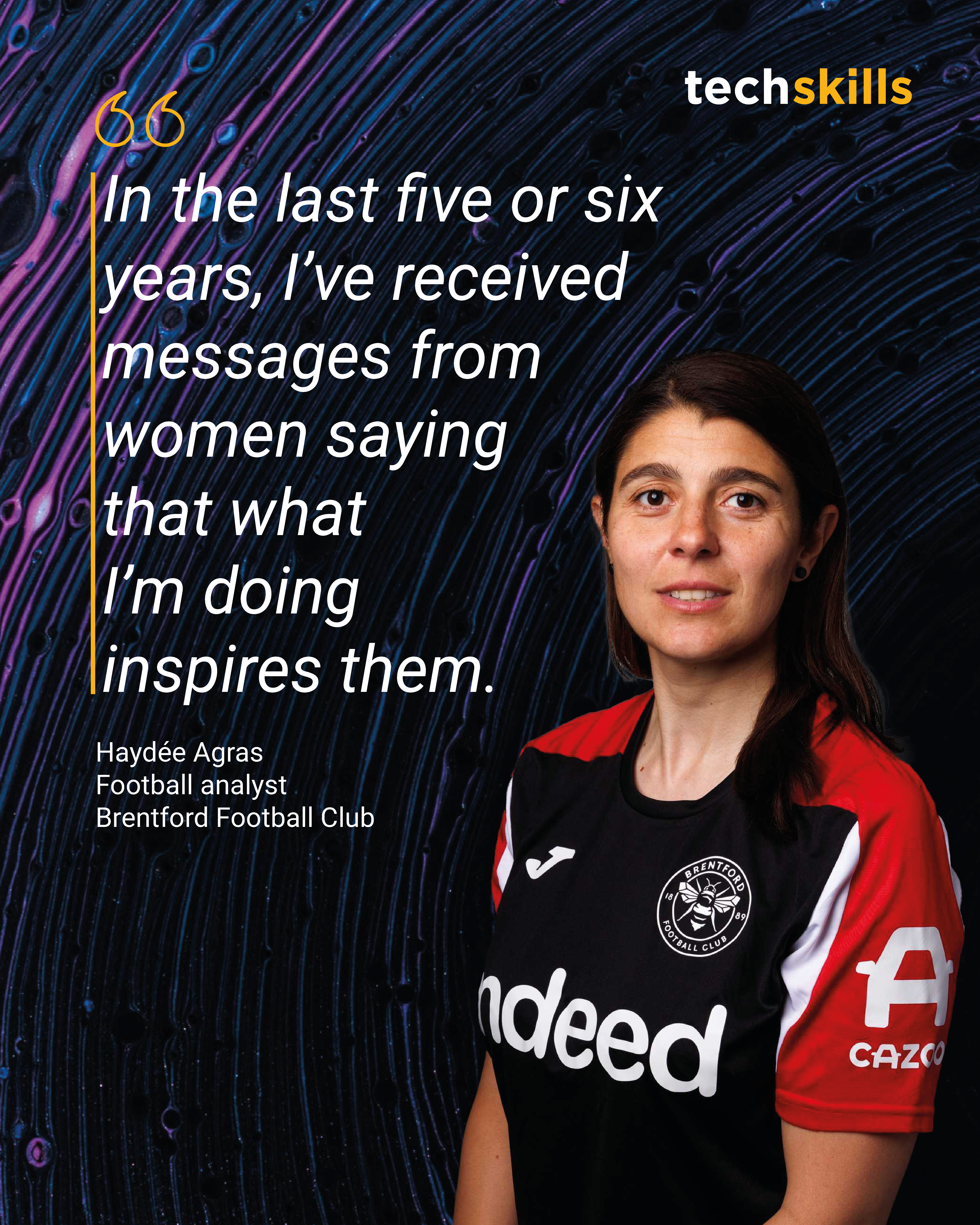
“In the last five or six years I’ve received messages from women saying that what I’m doing inspires them,” she says.
“It wasn’t something I was aiming for. But I understand now that visibility matters.”
For many young women considering careers in sport, technology or data science, seeing someone already working in those roles can make the path feel more achievable.
“It shows that it’s not impossible.”
Advice for future analysts
For anyone interested in sports analytics or data-driven careers in sport, Haydée offers three simple pieces of advice.1. Don’t take things personally
“Football is a high-pressure environment. Sometimes people react emotionally, but that’s not always about you.”2. Be adaptable
Having worked across several countries including Malaysia, Qatar, Kuwait, Spain and England, she believes adaptability is a major advantage.
“You need to adapt quickly to new environments, new cultures and new teams.”3. Always be ready
“You never know when an opportunity will come,” she says.
Preparation, curiosity and persistence are often the difference between missing an opportunity and stepping into it.The future of technology in sport
As technology continues to evolve, data will play an even greater role in shaping the future of sport.
From performance tracking and injury prevention to tactical modelling and real-time analytics, sports technology is becoming a core part of modern competition.
For analysts like Haydée Agras, it’s an exciting time to be working at the intersection of sport, data and innovation.
Her journey offers an important reminder for the next generation of women considering careers in tech:
Sometimes the most unexpected careers sit right at the intersection of passion and technology.